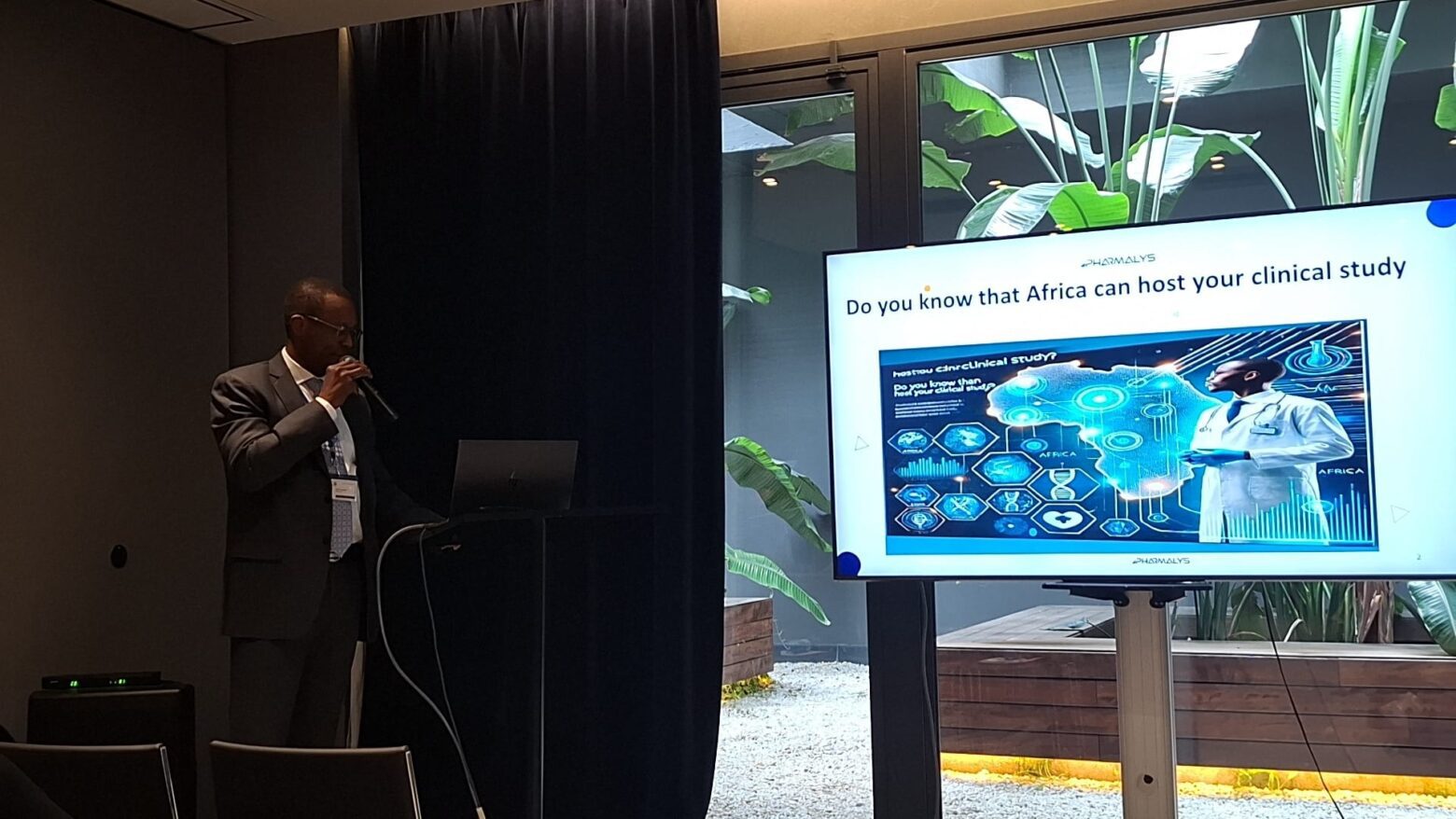
At this year’s Clinical Outsourcing Summit (COS) in April 2025, Dr. Karim Bagaté, Director of Clinical Operations and Safety at Pharmalys, delivered a presentation on a topic very close to our hearts, titled “Did you know that Africa can host your clinical study?”. The presentation explored both the challenges and opportunities that define the current clinical research landscape across the African continent, and why sponsors should be paying closer attention.
A Continent Underrepresented in Clinical Research
Despite carrying approximately 25% of the global disease burden, Africa contributes to less than 3% of clinical trials worldwide. Dr. Bagaté addressed this disparity and its implications, particularly regarding the applicability of trial outcomes to populations not represented in the research, shedding light on the complex ecosystem of clinical research in Africa. He noted that most trials remain concentrated in a few countries – such as South Africa, Kenya, and Egypt – and primarily target infectious diseases like HIV/AIDS, malaria, and tuberculosis. However, non-communicable diseases, including cancers, are on the rise and are reaching levels comparable to those seen in the global North.
Local Presence and Capacity Building Are Key
Dr. Bagaté underlined the growing trend of including African patient cohorts in global studies. As a result, understanding the African health context has become more important than ever, though not without logistical and operational challenges.
The region faces several key challenges, including:
- Regulatory complexity – lengthy approval processes and inconsistent frameworks, which are often mitigated by the large number of eligible patients across the continent.
- Infrastructure gaps – limited access to research facilities and technology. This highlights the importance of having local teams with a deep understanding of African health systems who can effectively navigate and overcome these challenges.
- Workforce capacity – a shortage of qualified and trained professionals. This underlines the need for experienced teams capable of delivering capacity building programmes to ethics committees, regulatory bodies, and site staff.
- Quality assurance – the need for systems that meet international compliance standards. Adhering to high-quality international standards is essential in clinical research, and the ability to audit and upgrade quality processes is key.
This is where Pharmalys excels.
Pharmalys: A Trusted CRO for African Clinical Trials
With headquarters in Europe and regional offices in Dakar, Pharmalys offers global sponsors the ability to run high-quality, pan-African clinical trials. African nations through a wide range of projects. Pharmalys’ exemplary track record spans multiple therapeutic areas, regulatory environments, and geographic regions.
What sets Pharmalys apart is its full-spectrum value chain:
- A proprietary quality management system (QMS)
- An internal team of clinical research experts
- A strong network of partners worldwide
- A comprehensive technology platform
- Experience in certifying clinical laboratories for GCLP compliance across Asia, Europe, Africa, and the US
Investing in Local Talent and Systems
Dr. Bagaté shared feedback from Pharmalys-led capacity building projects, where the team has helped to develop research governance, strengthen ethics committees and regulatory bodies. In addition to this, Pharmalys created the Pharmalys Academy of Clinical research Excellence (PACE) to train aspiring clinical research professionals. PACE has become a key initiative in cultivating a skilled, local workforce and supporting the long-term growth of Africa’s research ecosystem.
Africa’s Unique Advantages for Clinical Research
In addition to addressing the challenges, Dr. Bagaté outlined Africa’s unique advantages for clinical research:
- Genetic diversity – a rich genetic pool that enhances the relevance and inclusiveness of global data
- Global health equity – increased African participation improves representation in worldwide datasets, allowing populations to access medications and protocols that are adapted to their patient profiles
- Integration of traditional medicine – recent efforts to formally study traditional remedies offer promising research directions
- Economic development – expanding the research sector creates employment and strengthens local healthcare systems
Strategic and Financial Incentives
He also noted the continent’s attractiveness from a cost-efficiency standpoint, particularly with faster patient recruitment and access to treatment-naive populations. Major pharmaceutical companies such as Novartis, AstraZeneca, and GSK have already begun investing in African research, often partnering with local institutions. Additionally, NGOs and philanthropic organisations – including the Gates Foundation and the European & Developing Countries Clinical Trials Partnership (EDCTP) – continue to fund critical research initiatives on the continent.
A Call to Action for Sponsors
Dr. Bagaté’s presentation at COS 2025 reinforced a clear message: Africa is not only ready but well positioned to play a much larger role in global clinical research. With the right partners, the opportunity to build inclusive, sustainable, and impactful research solutions is within reach.
For more information about the work we are doing at Pharmalys, click here or contact us.