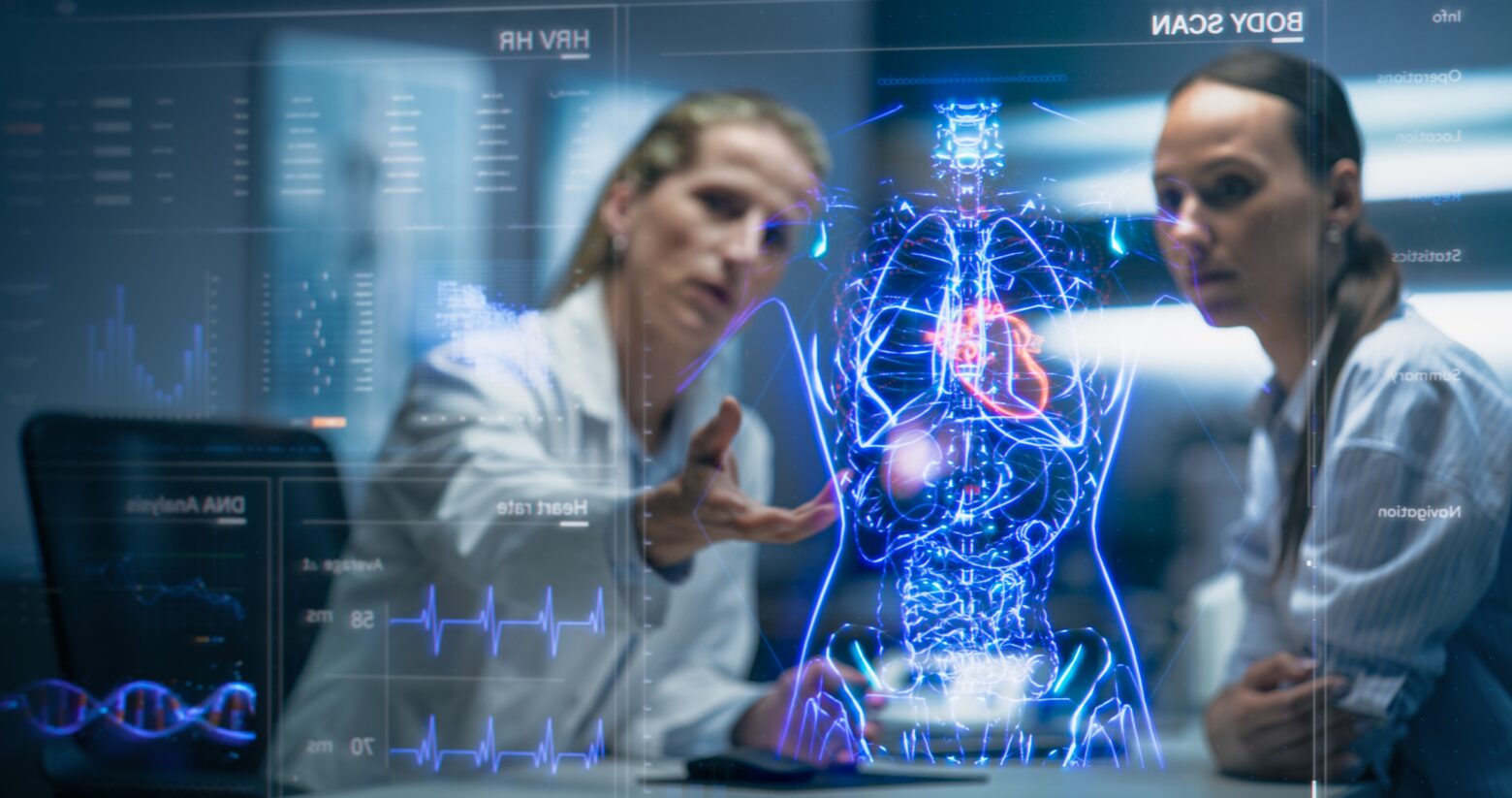
A Digital Twin (DT) is a virtual representation of a physical entity, such as a patient or system, designed to simulate real world processes with precision. It enables the generation of a complete and realistic clinical patient trajectory, including modelling patient behaviour and predicting outcomes. Read more
DT models and AI have emerged as transformative technologies in healthcare, offering significant potential to improve the design and execution of clinical trials. These technologies enable researchers to simulate a wide range of scenarios, address logistical challenges, and enhance the efficiency of clinical studies.
DTs could improve diversity in clinical trials
Diversity in clinical trials recognises that inclusion is not merely a statistical goal, but an ethical, scientific, and public health imperative. It is a multidimensional concept that extends beyond demographic representation to include characteristics such as race, ethnicity, gender, age, socioeconomic status, disability, sexual orientation, and the social determinants of health that influence healthcare access and outcomes.
Adequate representation in clinical research is essential for understanding disease aetiology, therapeutic response, and health disparities, and should be treated as a core scientific principle. Moreover, operationalising diversity requires careful consideration of how trial design, eligibility criteria, site selection, and recruitment strategies influence patterns of inclusion and exclusion. Failure to systematically address these design elements can perpetuate underrepresentation despite well-intentioned diversity mandates.
Historically, clinical trials have struggled with bias and underrepresentation, leading to a lack of generalisability in medical outcomes. According to statistics reported by the United States Food and Drug Administration (FDA) in 2013, the percentage of patients for whom medications are ineffective ranges from 38% to 75% across a number of conditions, from depression to cancer. This is due to variations among patients receiving the same or similar drugs, which are generally developed and tested to work for the average patient.
Underrepresentation of minority groups, logistical barriers to recruitment, and biases in data collection and analysis have hindered efforts to create inclusive studies. Such challenges compromise the validity of research findings and perpetuate healthcare disparities. In addition, traditional approaches to addressing these issues are often limited by resource constraints and inefficiencies, highlighting the need for innovative technological solutions.
DTs and AI offer a promising approach to overcoming these barriers by enabling the creation of highly detailed and dynamic virtual representations of diverse patient populations. By integrating real-world data, DTs can simulate clinical trial participation scenarios, predict treatment responses across different demographic groups, and optimise recruitment strategies to ensure broader representation.
AI-driven models can further enhance inclusivity by identifying biases in existing datasets, recommending corrective measures, and supporting adaptive trial designs that accommodate diverse patient profiles.
These technologies have the potential not only to streamline the clinical trial process, but also to reduce bias at multiple stages of research. DTs can help researchers understand how different patient groups respond to treatments, reducing the risk of skewed findings and improving the generalisability of trial outcomes. In addition, AI-powered recruitment tools can identify underrepresented populations and proactively engage them in research, helping to address longstanding disparities in trial participation.
Ethical and regulatory concerns
The implementation of DT technologies in clinical trials raises significant ethical concerns that must be addressed to ensure responsible and inclusive deployment. One central issue is the risk of privacy breaches and inadequate informed consent, alongside broader ethical concerns relating to transparency and data protection.
Many AI-enabled clinical systems lack robust real-world data governance frameworks, creating uncertainty around how personal data is collected, stored, and used. Without standardised mechanisms to monitor consent and algorithmic decision making, vulnerable populations may face increased risks of harm, misuse, or exclusion.
These findings reflect a broader need for ethical oversight mechanisms that ensure participants understand how their data is simulated and applied. Transparency and clear communication regarding data use remain limited, particularly among underrepresented communities that may be more vulnerable to exploitation.
Another challenge lies in the absence of formal regulatory oversight. While DTs demonstrate growing potential for trial simulation and intervention modelling, these technologies still operate outside clearly defined regulatory frameworks. This lack of clarity complicates efforts to ensure ethical consistency across clinical settings.
Several authors have highlighted the ethical implications of slow provider adoption, limited stakeholder education, and technical limitations affecting the interpretability and fairness of these tools. Without adequate training and standardisation, clinical personnel may inadvertently misuse AI-driven systems, potentially leading to unintended bias or inaccurate representation of patient outcomes.
Many studies indicate that these ethical challenges must be addressed through stronger regulatory alignment, improved data literacy, and patient-centered governance structures. Proactive investment in transparent system design, stakeholder engagement, and inclusive policymaking will be essential to ensure that AI and DTs are deployed ethically and equitably across diverse clinical trial environments.
Digital twins: a new opportunity for personalised medicine
The development of personalised medicine (treatment planning based on data specific to an individual patient) has been a challenge for the medical community for decades. At present, treatment decisions rely largely on best practice guidelines and a physician’s interpretation of the available data.
With unprecedented clinical volumes and the ever-increasing number and complexity of data sources, this process has become increasingly difficult, often resulting in a more generalised treatment approach rather than genuinely personalised care.
As summarised by the US National Academy of Medicine:
“The accumulation of data has created a situation where health-care providers are responsible for interpreting, aggregating, and synthesising data far beyond human capacity.”
This challenge is further exacerbated in low-income and middle-income countries, where patient-to-doctor ratios far exceed levels recommended by the World Health Organization (WHO).
In this context, health DTs offer clear advantages over conventional care by generating highly detailed and personalised disease model – often referred to as patients-in-silico. By combining epidemiological data with real-time patient-specific information, health DTs are becoming increasingly important in personalised medicine.
The growing use of wearables, environmental sensors, and smartphone applications that track physical activity, diet, and mental health generates continuous streams of physiological and environmental data. When combined with electronic health record data, including laboratory results, imaging, examinations, and genomic information, these datasets can be used to create synthetic data models that inform generative AI systems capable of predicting healthcare outcomes and clinical patient trajectories.
Importantly, the effectiveness of these projections can be measured and fed back into the health DT model to further improve future predictions.
Phase I and II trials especially can benefit from DTs
Health DTs may transform the conduct of clinical trials, particularly phase I and II studies.
Phase I clinical trials are primarily concerned with assessing the safety of a new drug or device. Traditionally, these trials involve a small group of healthy volunteers and focus on determining the appropriate dosage ranges and identifying potential side effects.
However, studies conducted in healthy volunteers may not accurately predict drug or device safety in patients with the target disease. The disease itself, together with underlying health conditions and concurrent medications, can significantly alter how the body responds, resulting in different safety profiles.
Used alongside traditional studies in healthy volunteers, health DTs could help refine safety assessments before administering a drug to actual participants by simulating patient responses, predicting potential side effects, and helping to optimise dosing strategies.
Phase II clinical trials are designed to evaluate the dosage and potential efficacy of a drug while continuing to assess safety, usually in a larger group of patients with the condition the treatment is intended to address.
Here, health DTs offer several unique advantages. Approximately 80% of all clinical trials are delayed or extended due to slow patient enrolment. The use of health DTs could reduce the number of patients required to assess a drug or device, which would be critically important for accelerating drug development while lowering both costs and patient burden.
Health DTs can also accelerate the development of therapies for orphan diseases, where recruitment if often limited by the small number of eligible patients.
For example, in phase I and II oncology trials, DTs can simulate comparator arms and therefore enable earlier efficacy assessment. They can increase the statistical power and confidence of survival analyses through larger volumes of simulated data, helping to accelerate clinical decision making.
Health DTs in clinical trials present several challenges
Despite their potential, the use of DHTs in clinical trials presents several challenges. Some are common to AI prediction models in general, while others are unique to this particular application.
The accuracy of health DTs depends on the quality and comprehensiveness of the data used to create them. Incomplete or biased databases can lead to inaccurate predictions, potentially compromising the validity of trial results.
Like many AI systems, health DTs can also function as “black boxes”, where the decision-making process lacks transparency. This limited interpretability can create scepticism among researchers, clinicians, and regulators, potentially hindering wider acceptance and implementation.
In addition, current generative DT models are generally restricted to a single therapeutic target. While they may be highly specialised for that target, they often lack broader applicability across multiple therapeutic areas.
Furthermore, many methodologies used to train these models rely on datasets containing fewer than 5,000 patients. For deep learning applications, this is considered relatively small and may limit the generalisability of the models when applied to more heterogeneous patient populations.
Conclusion
Health DTs represent a promising innovation in both early- and late-phase clinical trials, offering the potential to improve efficiency, reduce cost, enhance precision, and strengthen ethical standards in drug and device development.
Although several challenges remain, including issues relating to data quality, governance, interpretability, and implementation complexity, the potential benefits of DTs, particularly in phase I and II clinical trials, are considerable.
As the technology continues to evolve, health DTs are likely to play an increasingly important role in the future of clinical research, supporting the development of safer, more effective, and more personalised treatments for patients.
Véronique Ropion
Director of Business Strategy, Marketing and Corporate Communication, Pharmalys Ltd
Sources
- Bordukova M., Makarov N., Rodriguez-Esteban R., Schmich F., Menden M.P. (2024) Generative artificial intelligence empowers digital twins in drug discovery and clinical trials, Expert Opinion on Drug Discovery, 19:1, 33-42, DOI: 10.1080/17460441.2023.2273839
- Kamel Boulos, M.N.; Zhang, P. Digital Twins: From Personalised Medicine to Precision Public Health. J. Pers. Med. 2021, 11, 745. https://doi.org/10.3390/ jpm11080745
- Mann D.L. The Use of Digital Healthcare Twins in Early-Phase Clinical Trials. Opportunities, Challenges, and Applications. J A C C: Basic to translational science. 9, N°.9, 2024.
- Sadée C. et al. Medical digital twins: enabling precision medicine and medical artificial intelligence. Lancet Digit Health. 2025 July ; 7(7): 100864. doi:10.1016/j.landig.2025.02.004.
- Tubbs A., Alvarez Vazquez E. Digital twins in increasing diversity in clinical trials: A systematic review. Journal of Biomedical Informatics 169 (2025) 104879.